
NO.
05.
Neighborly
Embedded four weeks inside Neighborly's in-house creative team. Turned the repetitive work behind 19 home-service brands (resizes, US to Canada versions, seasonal edits, briefs, color checks) into eight documented AI workflows the team now runs on its own.
 CREATIVE TEAM ACTIVATION · 2026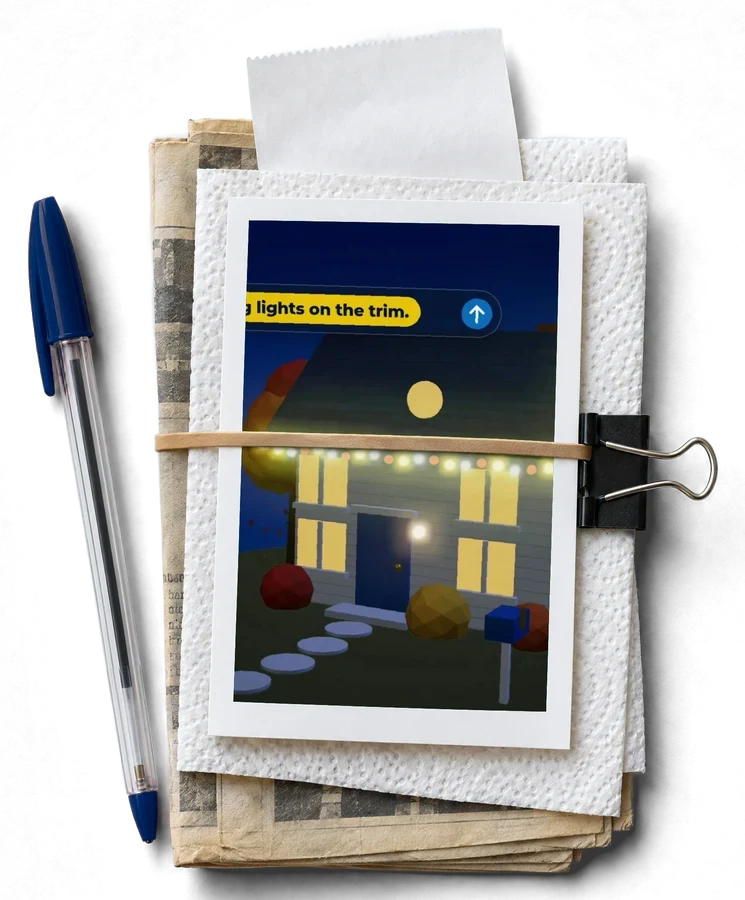
The brief
FIG. B · 01Neighborly is the parent company behind 19 home-service brands, Mr. Handyman and Molly Maid among them, across the US and Canada. All that creative runs through one lean in-house design team. Five to seven requests a day, 400-plus last quarter, much of it the same work in a different size.
The graphic designer carried the highest-volume tickets: display and banner resizes for every placement, plus US and Canada versions of each campaign, often 40-plus assets from one request. The associate creative director had already built a ChatGPT script that spits out 68 print templates from a dropdown, and still spent her days hunting for files across systems.
AI was in the building. Everyone used it a little, each from a different starting point, and the first passes kept coming back off-brand. The tools started blank every time, with no idea what Gotham Bold or a brand's exact blue looked like.
So the engagement ran four weeks, embedded role by role. Find the highest-leverage repetitive work, build its AI workflow on a live ticket, document it for anyone to run, and leave the team running without me.
The approach
FIG. A · 02The operating principle went up on day one: stop starting from zero, start from one.
Every session ran on a real ticket. A Mr. Handyman trifold needing new copy. Three social graphics needing the same photo swapped in, and (the fun one) a stock house photo that needed fall, 10 p.m., and string lights along the trim. If a workflow couldn't survive the actual request, it didn't get documented.
The Keep/Change prompt formula became the spine: say exactly what to touch and what to leave alone, then name the output you want. Around it, the habits that make the model behave: four options instead of one, a fresh chat per job, the model writing and fixing its own prompt. All written down so a new hire with zero AI experience gets the same result.
The guardrails went in before the builds. Talent contracts restricting changes to a person's likeness got a hard line, and anything touching brand marks was staged behind legal. Then I specced the permanent fix for the off-brand first pass: a brand-context layer, one ChatGPT project per brand holding its guidelines, font files, logos, color values, and a few approved examples, so every edit starts on-brand.
GPT Image 2.5 shipped midway through week two. The playbook was re-tested and rewritten around it that same week, every original step preserved.
The work
FIG. W · 03Eight workflows documented and tested on Neighborly tickets, with five more scoped and staged. Copy changes on a finished layout in one pass. US to Canada versions from one prompt (the Canadian logo, the .ca URL, neighbourly with a u). One photo into five sizes, all five landing. Seasonal and holiday edits off one base photo, four options at a time, plus photo swaps across a batch of graphics and transparent cutouts of the brand elements models like to mangle. Weekly reporting straight off the monday.com export. And a color-guide QA workflow that reads about 60 swatches across all 19 brands and cross-checks the CMYK values against four models before a vehicle-wrap printer sees them.
Brief assembly, the creative PM's bottleneck at 15 to 60 minutes per request and about eight requests a day, dropped to under a minute. Raw form data in, formatted brief out.
It all lives in a shared Notion hub (step-by-step documentation, copy-paste prompts, session recordings) built to survive turnover. The creative director owns adoption now, and the graphic designer who opened the month saying AI wasn't her first instinct closes tickets with it by default.
The last session, a lunch and learn for a dozen people on the wider marketing team, gave the habits somewhere to spread. Four weeks in, the design team runs it without me.